VR training simulators for oil and gas, maritime and other industries · Kazakhstan
Practice in VR first. Then on site.
VR training simulators based on your company’s work instructions and procedures. Your employees practice operations and emergency response as many times as needed before they set foot on a well site or a ship, with no risk to people or equipment.
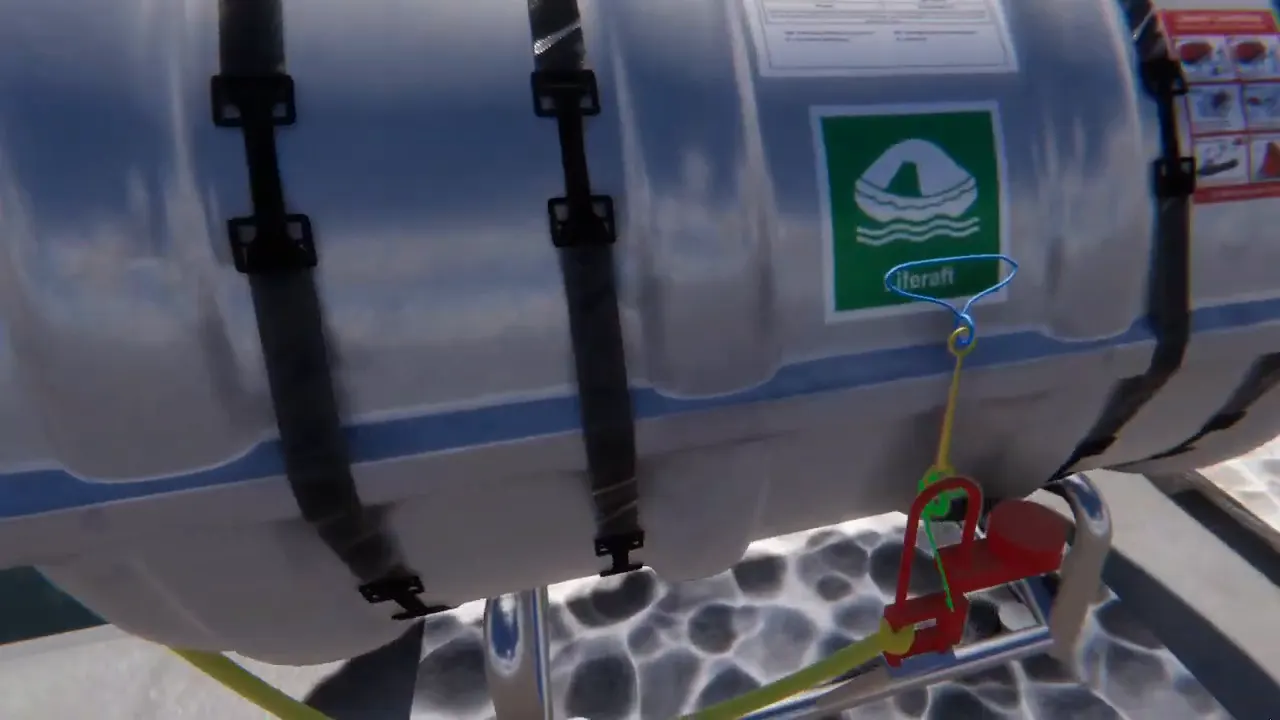
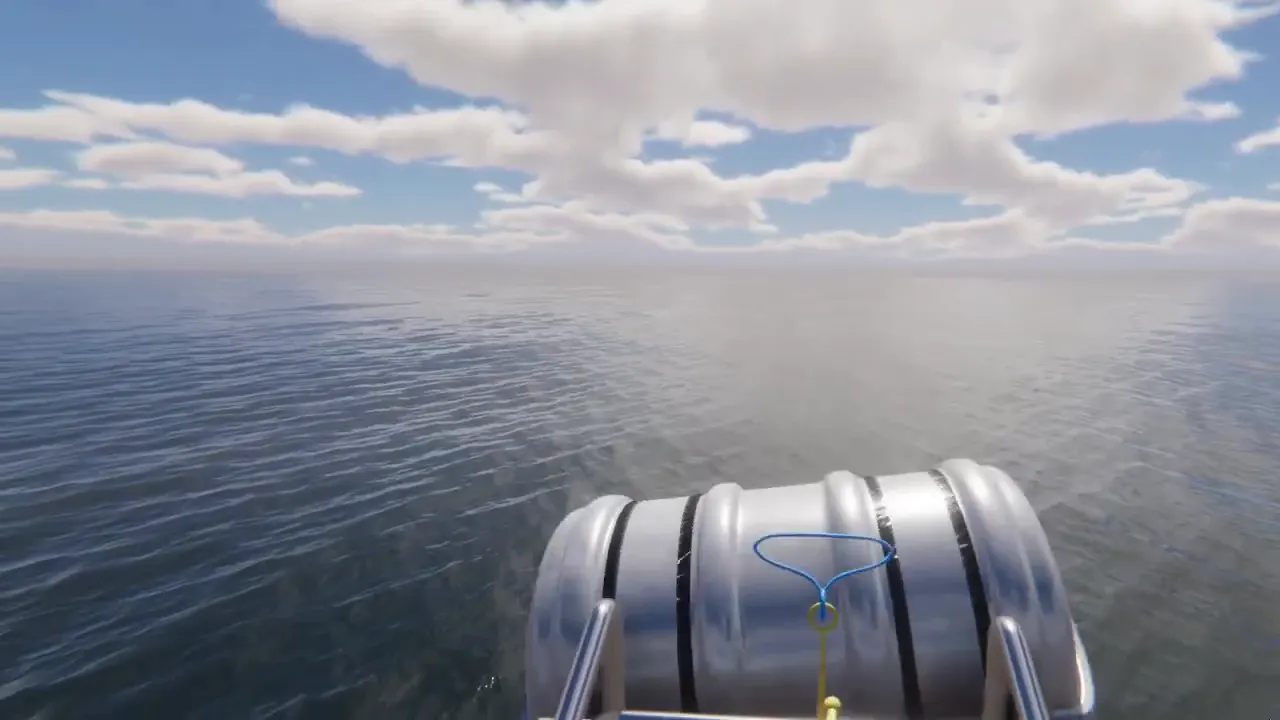
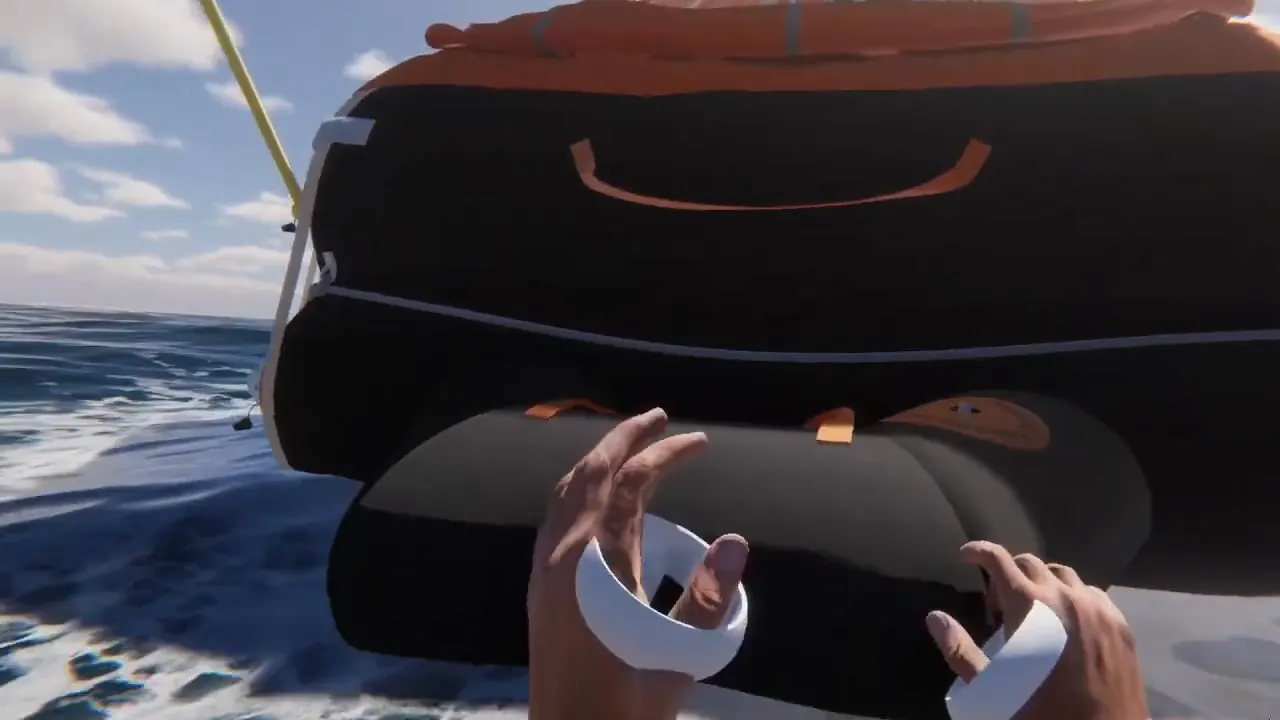
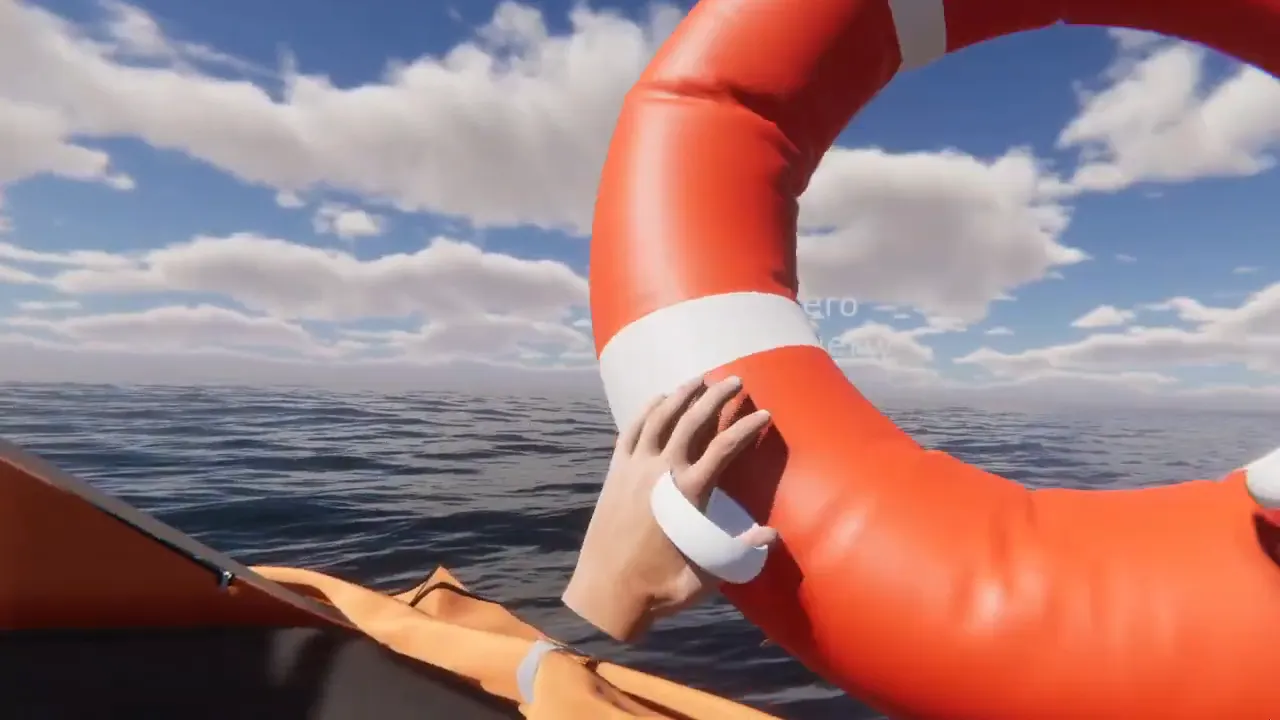
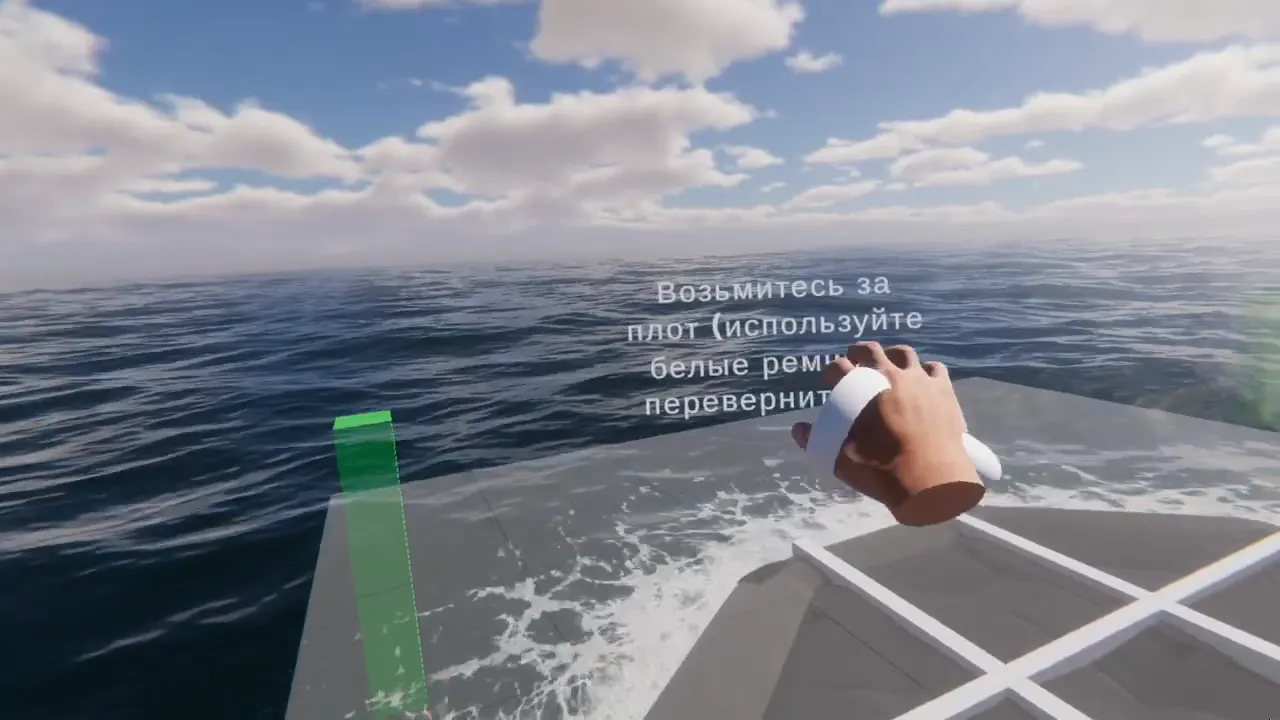
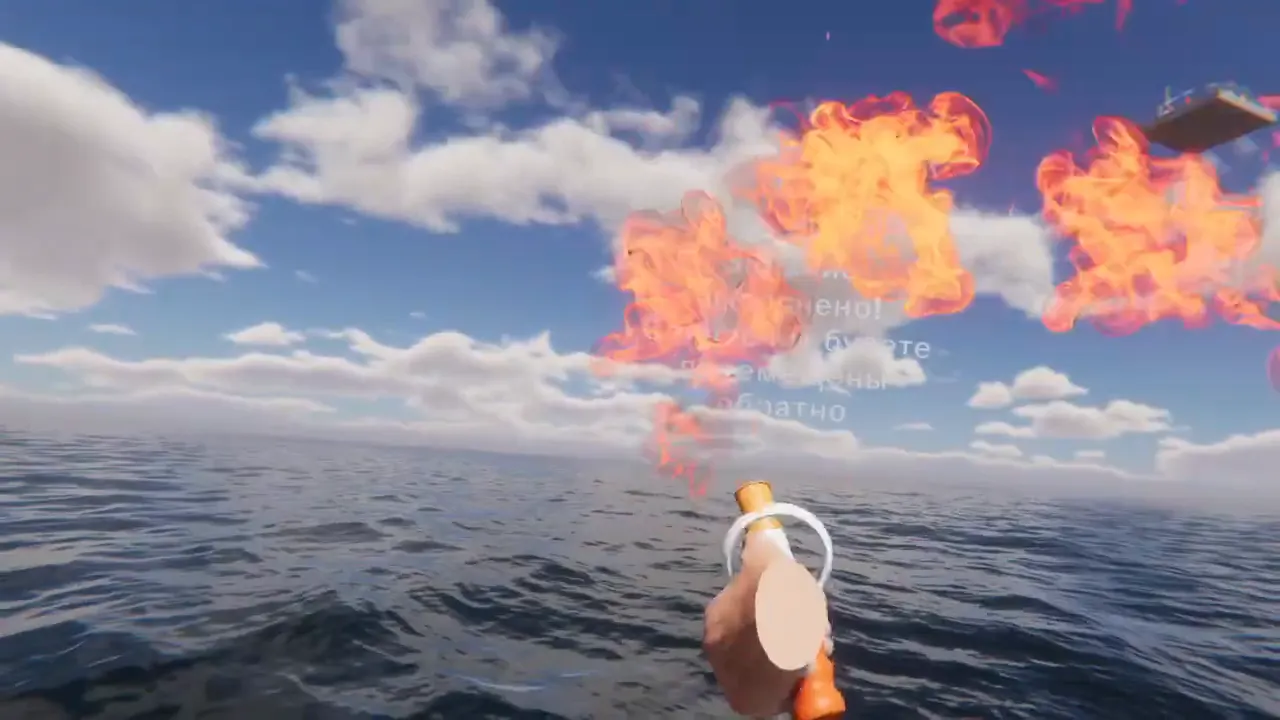
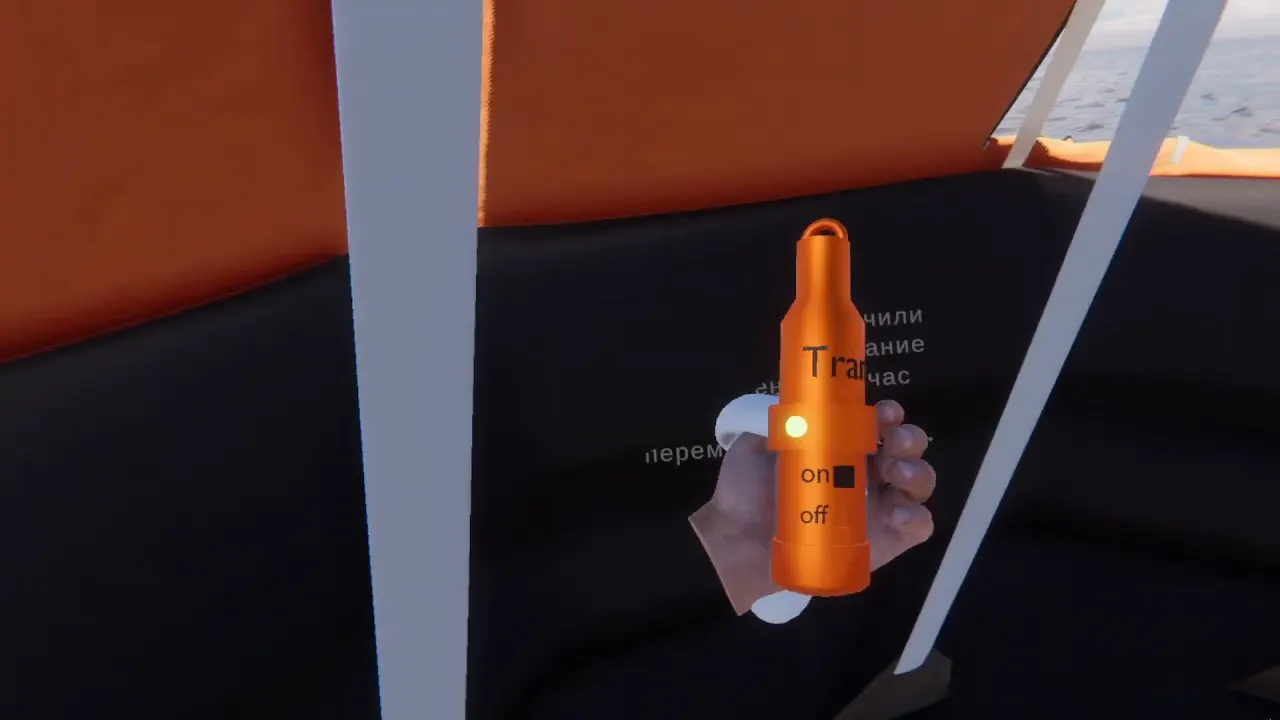
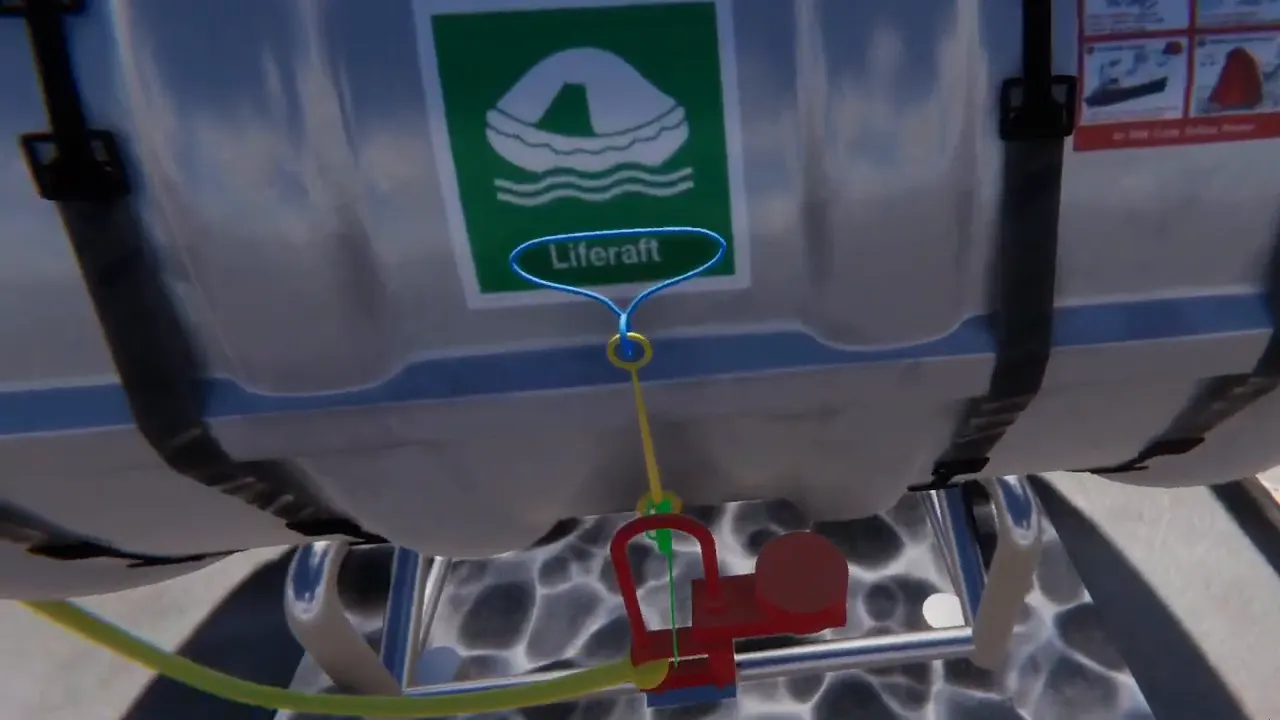
The trainee goes through the sequence from the alarm to a closed canopy on the raft: puts on an immersion suit, launches the raft, climbs down the embarkation ladder and completes the tasks on the water.
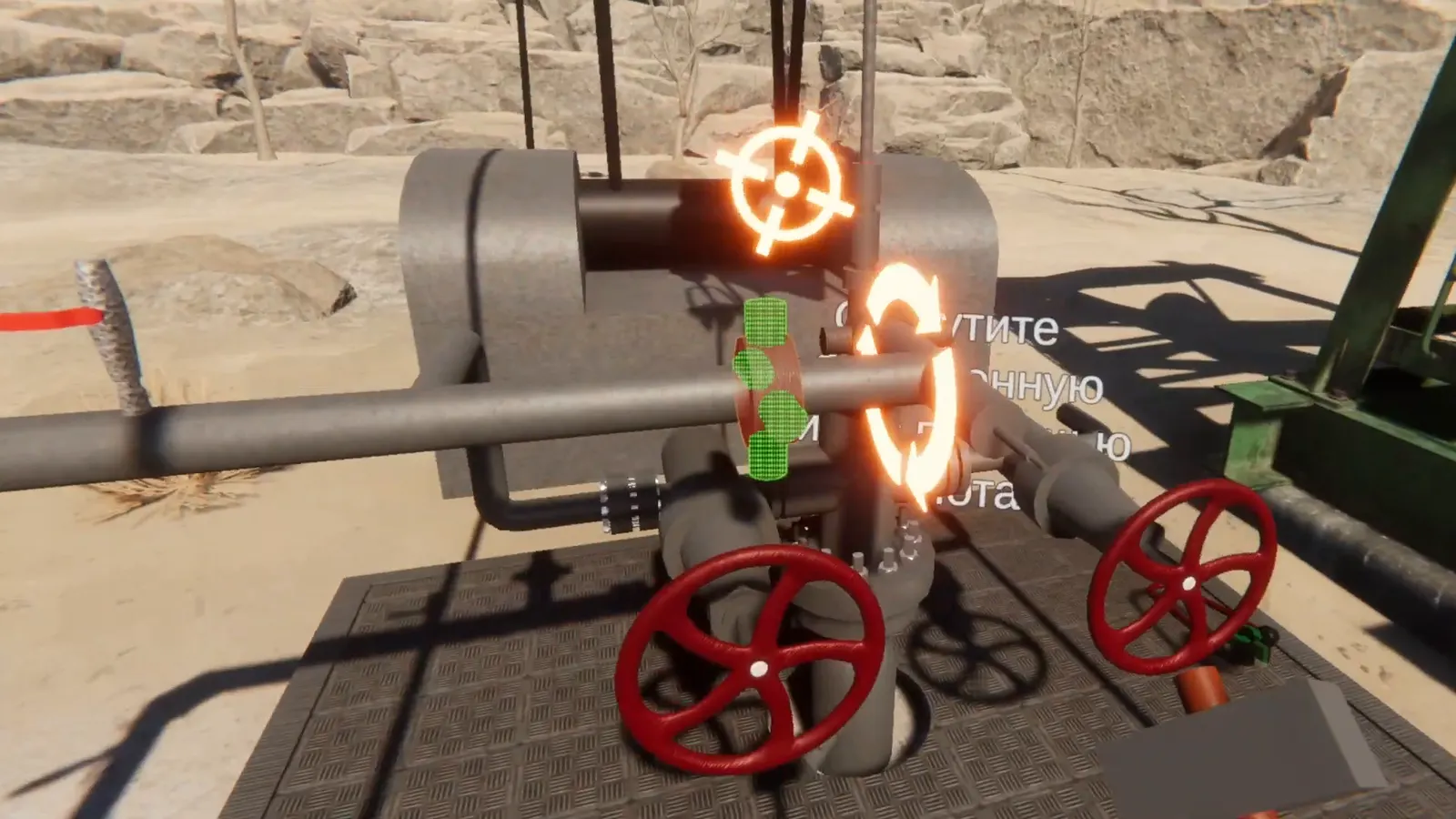
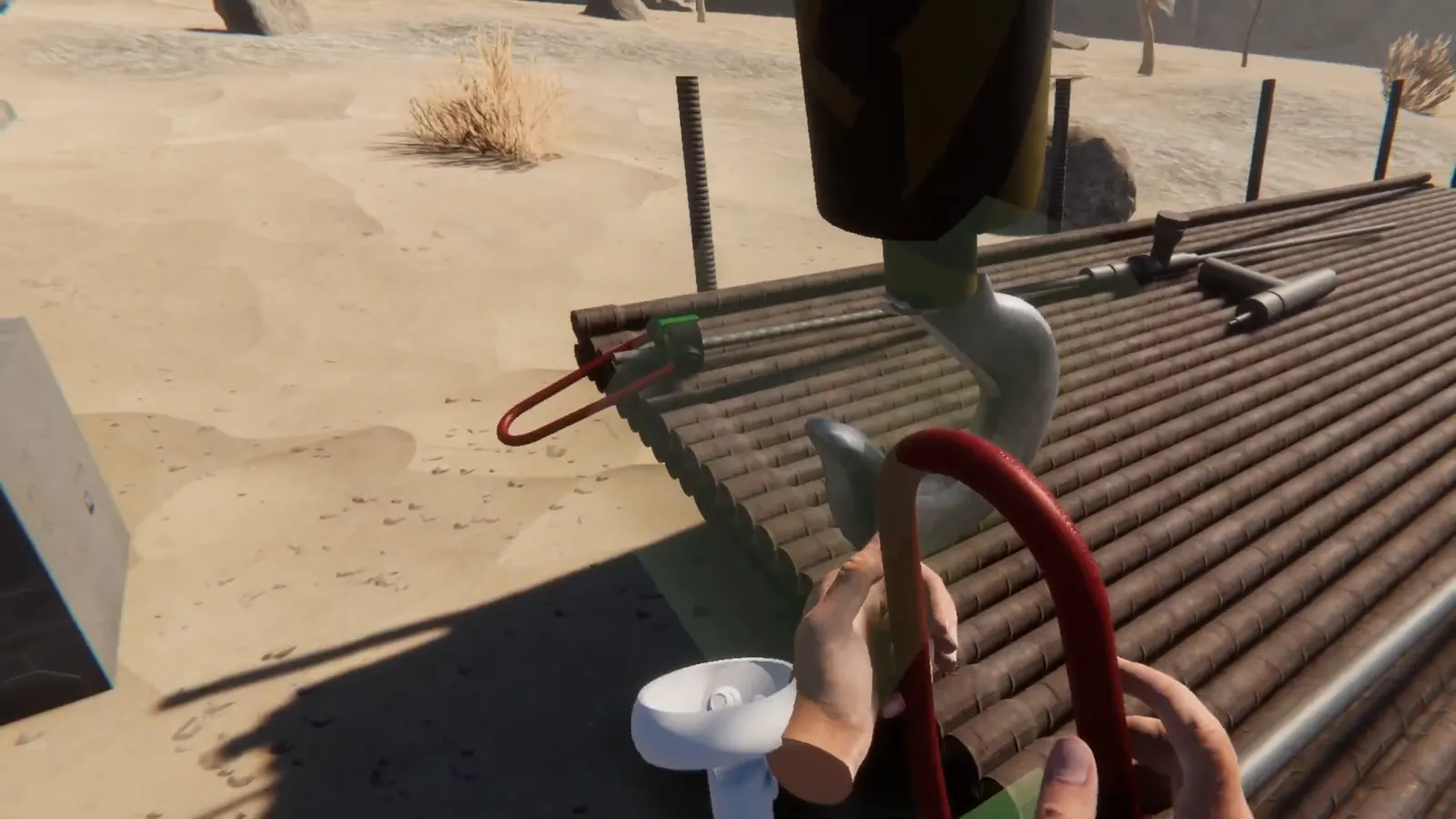
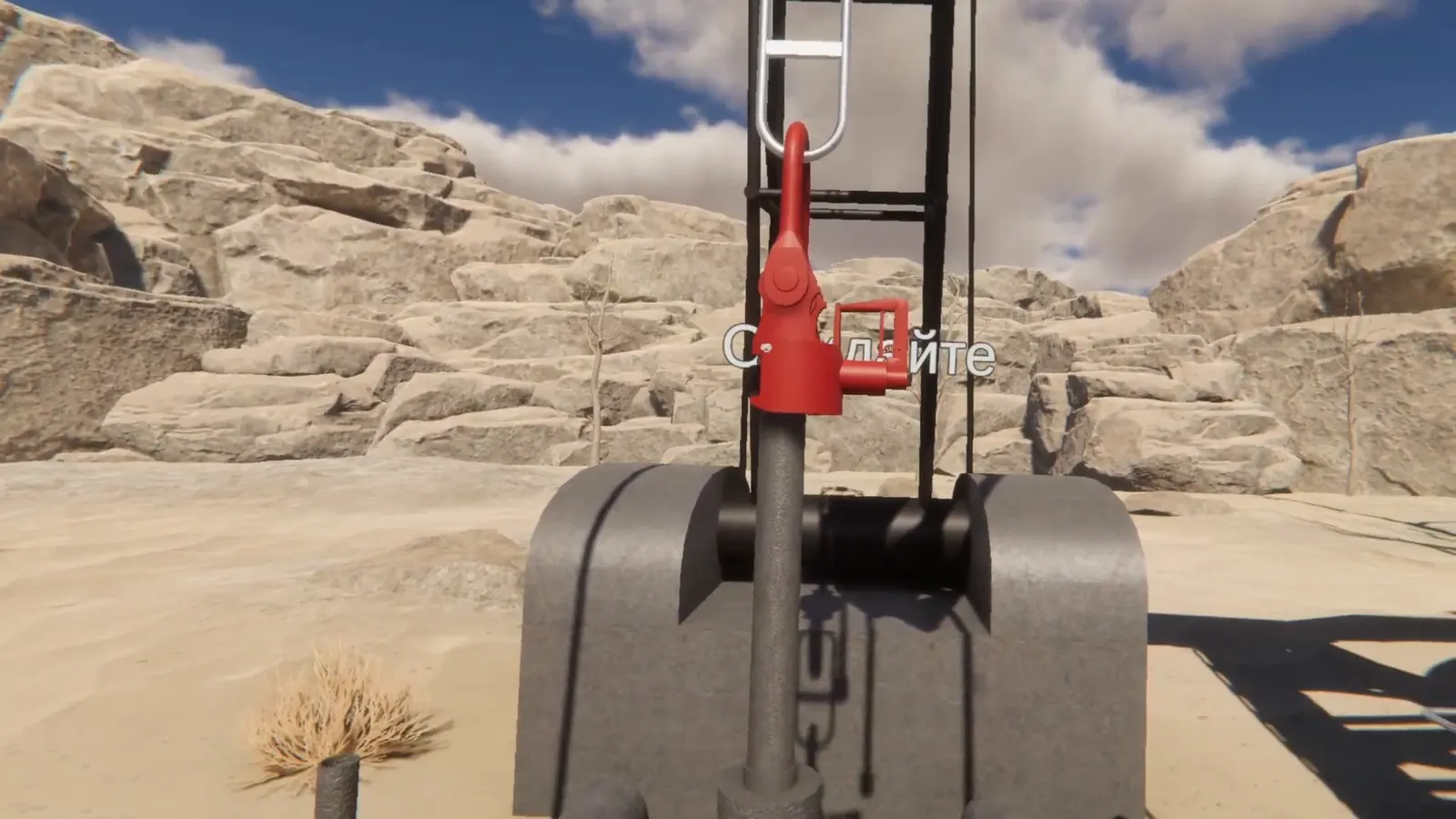
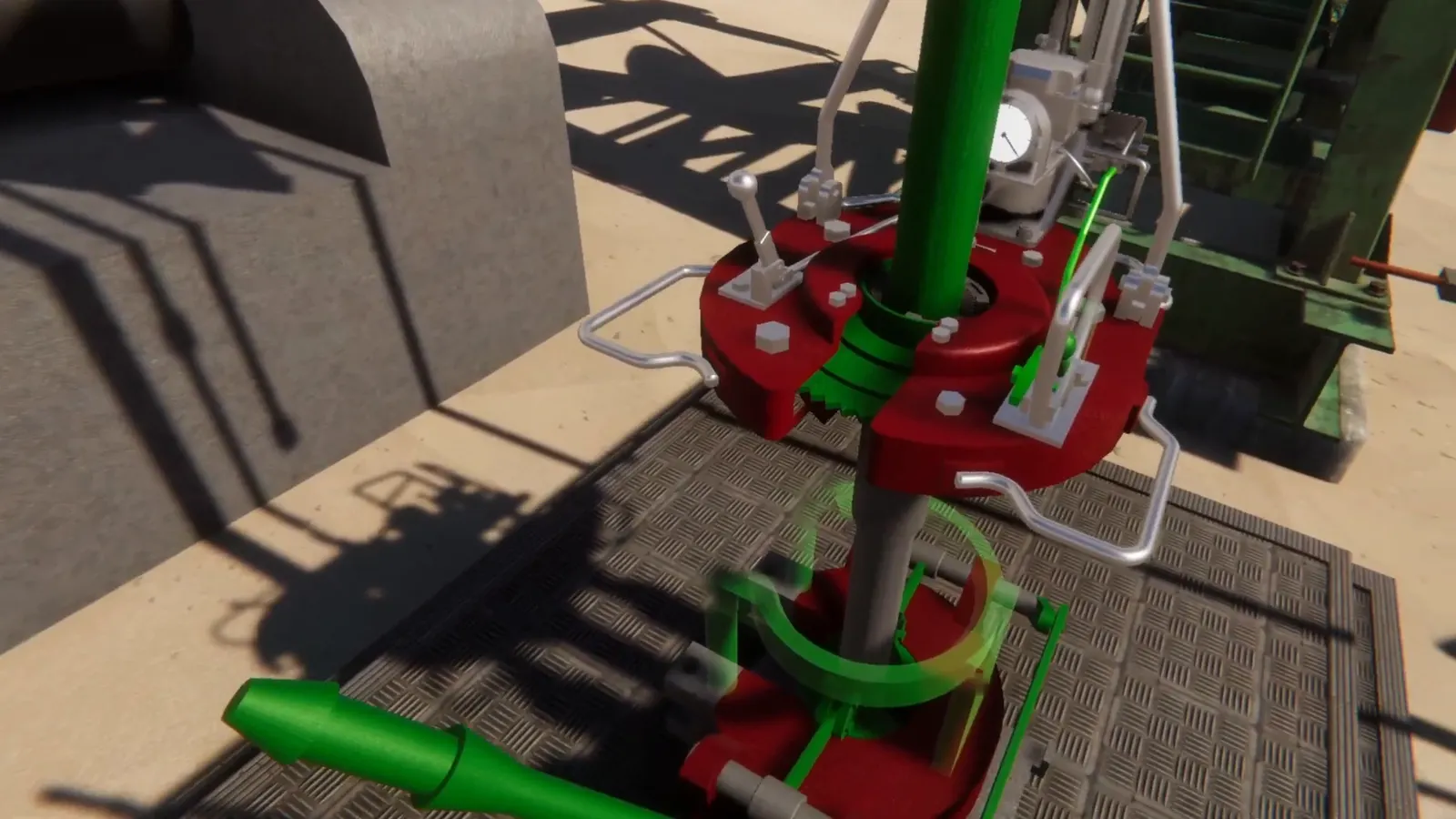
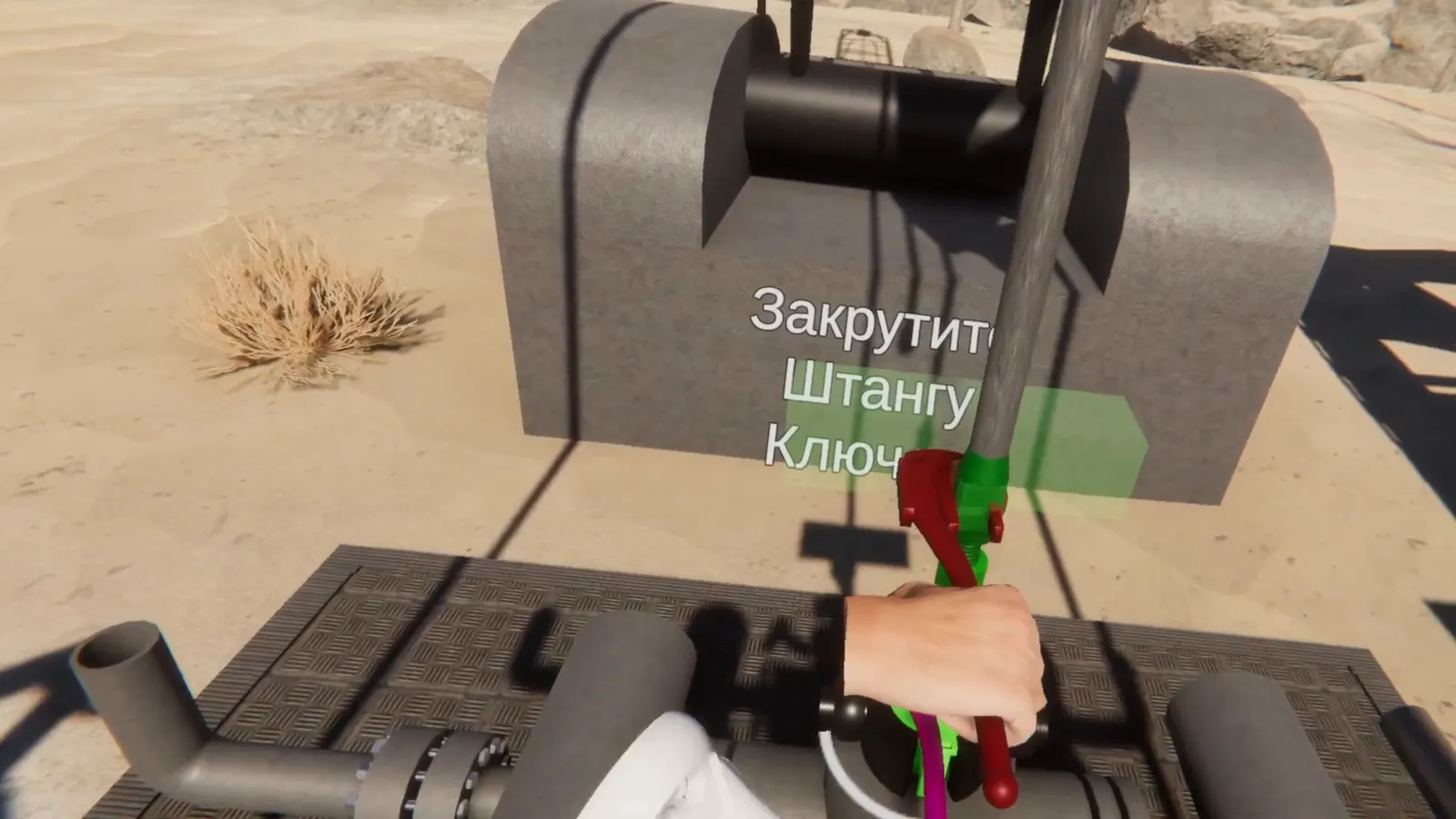
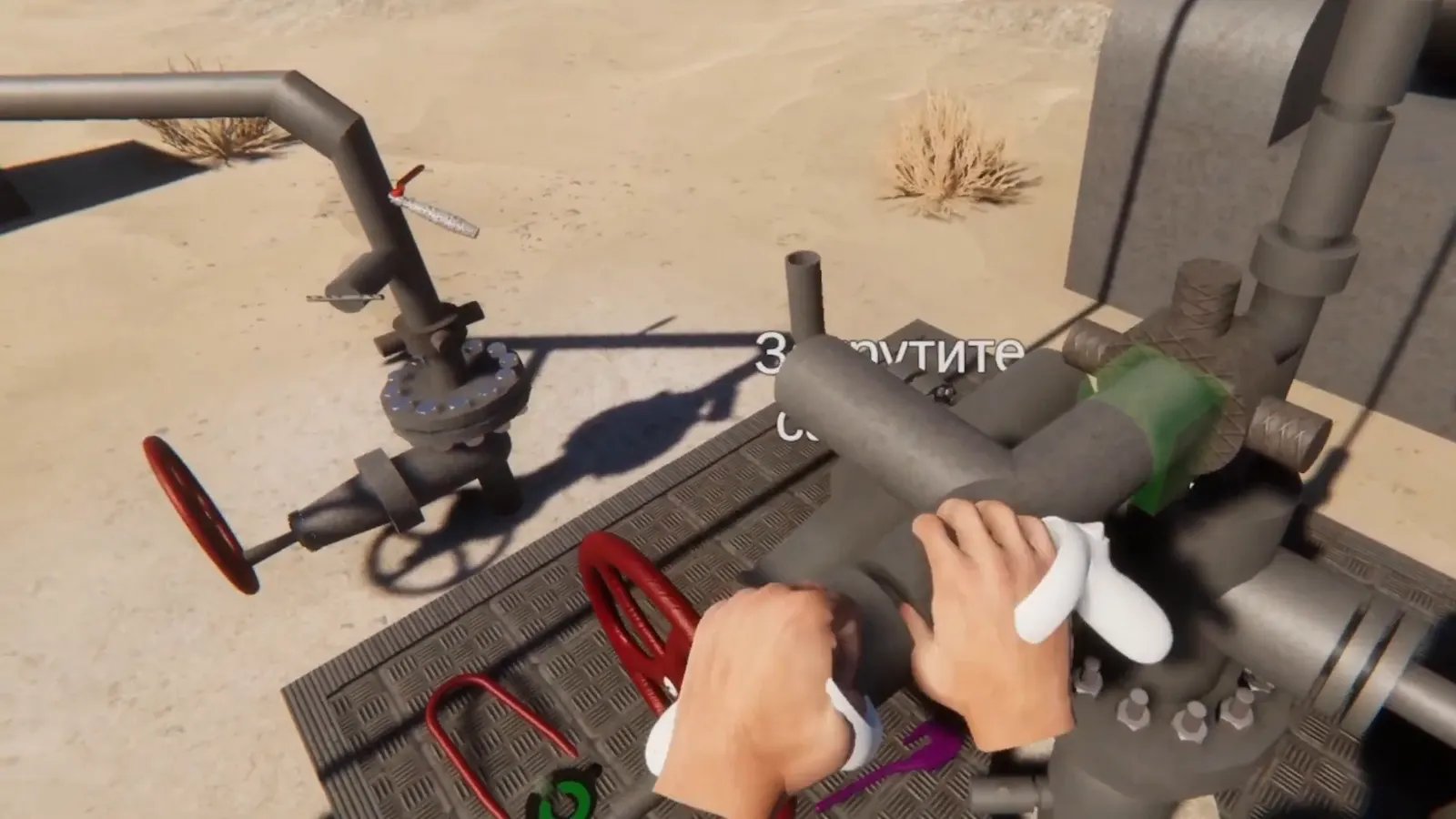
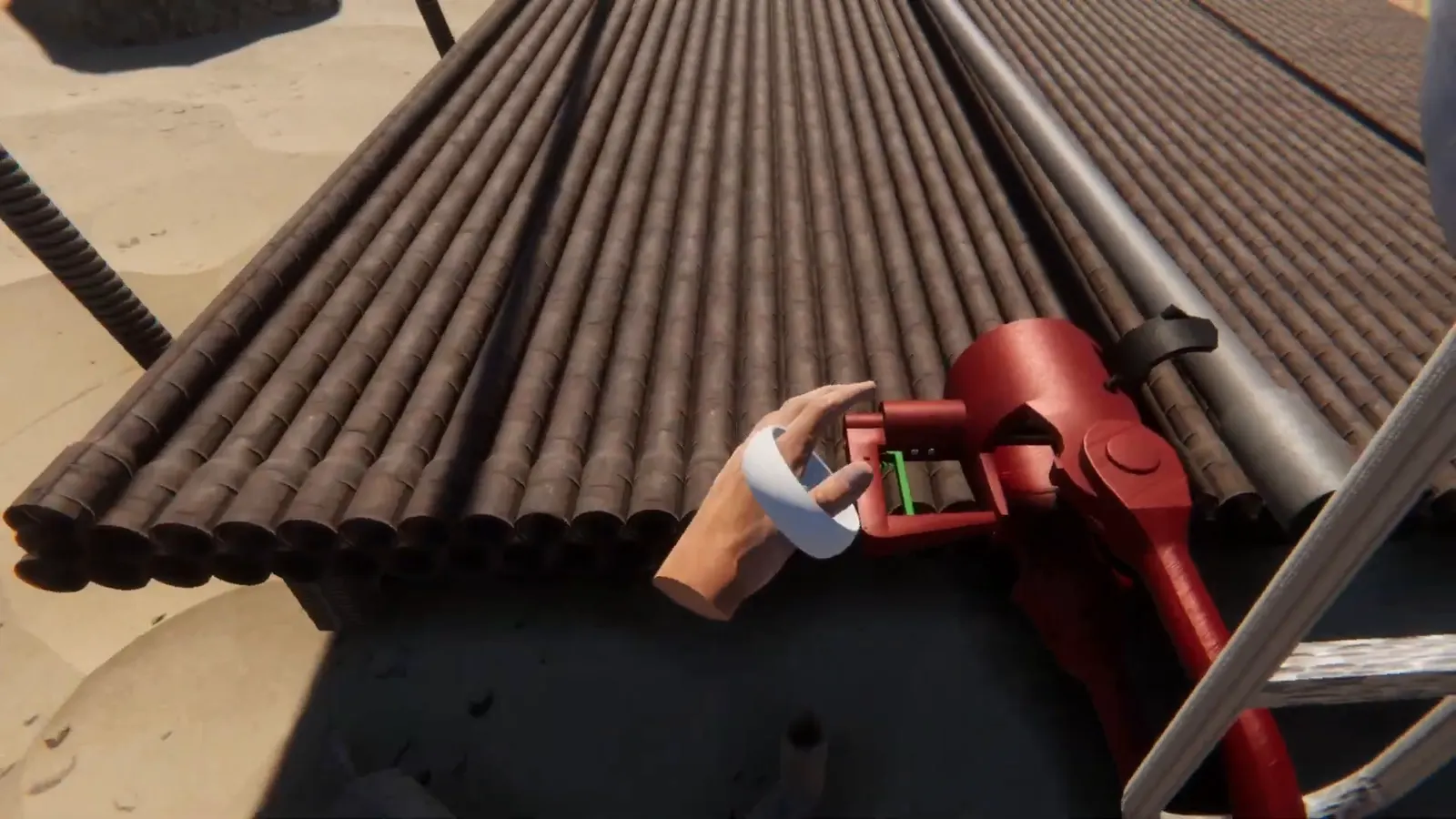
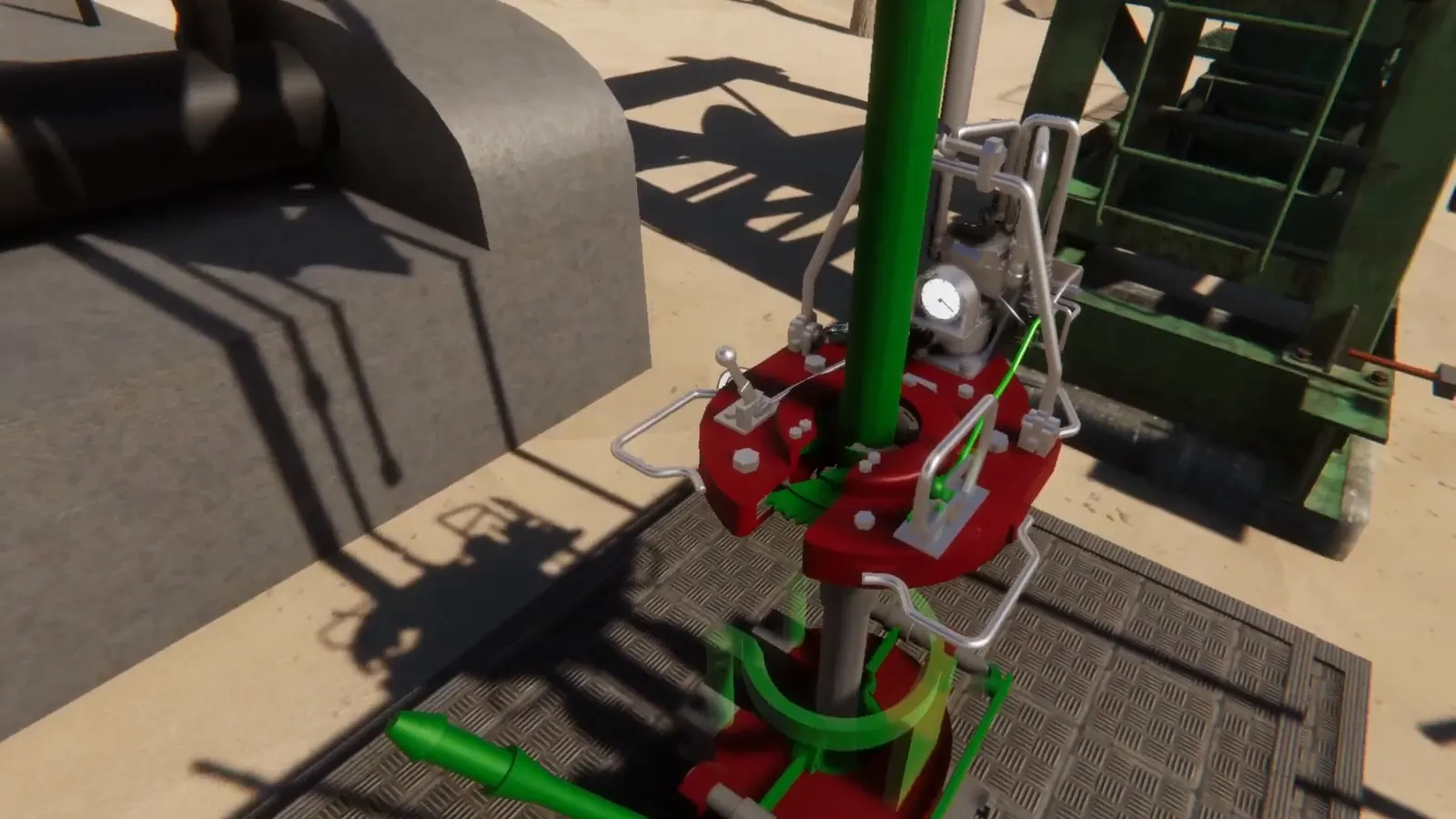
Six linked scenarios in which a well servicing operator works through the full cycle by hand: dismantles the wellhead, pulls and runs rods and tubing, and puts the wellhead assembly back together.
Scenarios
6 scenarios, about 160 steps
Equipment
ETA-60, rod elevator, spider, power tong
Models
Key equipment modeled in-house
Project details →
Why a simulator, not another safety briefing
You can know a procedure by heart and still freeze on deck or at the wellhead. Confidence comes after doing it with your own hands a few times.
You can’t recreate a real emergency on site
On-site drills are held without stopping work, and raft righting and firefighting are practiced in training courses. In VR, a scenario runs as many times as needed, with no risk to people or equipment.
Practice without a site visit
You can practice the steps without a well or a vessel, and without taking a group out to the field. The simulator sits in a training room, at a base or in a field camp.
The same steps for every shift
Every worker goes through the same sequence from the work instruction. The simulator won’t let them move on until the current step is done.
Official data: workplace injuries and training requirements
of practical training, including on simulators and training devices, is the minimum under the revised Occupational Safety and Health Training RulesMinistry of Labor Order No. 223 of May 30, 2026
How the simulator works
Trainees don’t pick actions from a menu: they grab a tool with the controller and use it like the real thing. They turn a gate valve, swing a sledgehammer, pull the spider lever, and the physics responds to every move.
Movements, not menus
Physics-based virtual hands: trainees pick up the wrench, sledgehammer, bailer and hand flare and operate them with hand movements.
Steps from your work instructions
Each scenario is built from the work instruction and procedures. On-screen text prompts the next action, and a hologram shows where a component goes.
Our own 3D equipment models
We modeled the ETA-60, rod elevator, spider and power tong ourselves. We model the equipment at your site from drawings, photos and measurements.
Three languages
The maritime simulator already runs in Kazakh, Russian and English. For a new simulator, you choose the language.
Every step checked
The simulator won’t let trainees move on until the step is done. During rollout, we add a hint-free exam mode, error and time tracking, and a log for each employee.
Works offline
After the initial headset setup, the simulator runs locally, so it works at oilfields, on ships and in training rooms without internet access.
A Kazakhstani team, not a reseller
We’ve been building VR projects since 2024. We take each project from the review of work instructions and procedures to the last line of code.
Sagynay Kengesbek
Founder, CTO
Unity developer. Responsible for the scenario logic, interaction physics and hint system in our simulators.
Our VR station stays with you for 4–8 weeks: you test the format with your own group before deciding to buy. We check the steps against your work instructions.
VR station for the pilot period
Log and results record for each worker
Before-and-after test, report
Cost credited toward a contract signed within 90 days
Prices exclude VAT. We agree on the final amount including taxes, the contract terms and the list of procurement documents in the commercial proposal. A 4-seat VR classroom starts at ₸5M (≈ $11,000) for software, installation and instructor training; hardware is supplied through a partner or bought to our specification, at about ₸1.3–1.5M (≈ $2,800–3,300) per station.
From work instruction to simulator
We work in short stages. After each one, you see the result and can adjust the scenario.
1
Demo1 meeting
We bring headsets and show our simulators to your HSE and training specialists. We discuss which operations are most important to practice.
2
Process review1–2 weeks
We sign an NDA and study your work instructions, procedures and emergency response plans. We visit the site to photograph and measure the equipment.
3
Scenario and 3D models2–4 weeks
We map out the steps and emergency events, and model the equipment at full scale. You approve the scenario.
4
Build and group testing3–6 weeks
We build the simulator and test it with a group of your employees. We collect instructor feedback and make improvements.
5
Rollout and supportper contract
We install the simulator on your hardware, train your instructors and update the scenarios when procedures change.
The first scenario tailored to your process takes 6–12 weeks. A scenario on equipment we already know takes less time than a set of several scenarios at a new site.
Industries we build for
We’ve already built simulators for the maritime industry and for oil and gas. For mining, energy and rescue services, we build scenarios tailored to your process on the same platform.
Simulator already built
Oil and gas
Well servicing and tripping operations. Scenarios for workover, work on pressurized equipment and gas-hazardous work are tailored to your process.
Well servicing and workover crews, oilfield service companies, training centers
Simulator already built
Maritime
Abandon ship, life-saving appliances, man overboard. Fire and flooding scenarios are tailored to your process.
Crew and cadet training, training centers
Tailored to your process
Mining and metals
Fire and gas emergency response, self-rescuers, energy isolation, lifting operations.
Mines, processing plants, production shops
Tailored to your process
Power and utilities
Switching operations, electrical safety, work at height and in confined spaces.
Substations, power lines, thermal power plants
Tailored to your process
Rescue services
Emergency response on water and on land, use of rescue equipment, first aid.
Training centers, personnel training
Tailored to your process
Colleges and universities
Practice on equipment the training workshop doesn’t have, and a first look at the job before the first rotation.
Technical colleges, universities, corporate training centers
Frequently asked questions
Do we need to buy VR headsets up front?
No. We bring our own equipment for the demo and the pilot. The simulators currently run on a PC with an RTX 4070-class graphics card and a Meta Quest 3 headset. For permanent use, we’ll put together a kit that fits your budget: one station costs about ₸1.3–1.5M (≈ $2,800–3,300). If your information security team doesn’t allow Meta accounts, we’ll find a headset that doesn’t need one.
How much does a simulator cost?
A pilot with our scenarios starts at ₸1.5M (≈ $3,300), and a scenario tailored to your process at ₸4.5M (≈ $9,800). A 4-seat VR classroom starts at ₸5M (≈ $11,000) for software, installation and instructor training; hardware is supplied through a partner or bought to our specification, at about ₸1.3–1.5M (≈ $2,800–3,300) per station. Prices exclude VAT. We prepare an exact estimate free of charge after reviewing your work instructions.
How long does development take?
The first scenario tailored to your process takes 6–12 weeks, from reviewing your work instructions to testing with a group of your employees. A set of several scenarios takes three months or more. We give the exact timeline in the estimate.
Can you build a simulator for our equipment?
Yes, that’s the core of our work. We build the models from your drawings, photos and measurements, and the steps from your work instructions and procedures.
What language will the simulator be in?
The maritime simulator already runs in Kazakh, Russian and English. We build new simulators in the languages you need; the language is selected in the menu before you start.
Does the simulator work offline?
Yes. After the initial headset setup, the simulator runs locally and doesn’t need a connection, so it works at oilfields, on ships and in field camps.
Does VR replace mandatory occupational safety training?
No, and we don’t claim it does. The revised Occupational Safety and Health Training Rules (Ministry of Labor Order No. 223 of May 30, 2026) explicitly mention practice on simulators and training devices (paragraph 12). The order sets their effective date as July 12, 2026; the ministry has initiated a postponement to January 1, 2027. A VR simulator helps meet the requirement for such practice and prepares people for drills under your emergency response plan, but it doesn’t replace an actual drill. You handle competency checks and paperwork as usual.
Are training results recorded?
Currently, the simulator guides the trainee through the steps of the work instruction and won’t let them move on until they take the correct action. During rollout, we add a hint-free exam mode, error and time tracking, and a per-employee log that can be exported for your HSE department.
What happens to our work instructions and site photos?
We sign an NDA before receiving any documents. We don’t publish your work instructions, procedures or site photos, or share them with third parties. We specify in the contract what can be reused, such as models of standard equipment: existing models cut both lead time and cost.
Who owns the rights to the simulator?
That’s agreed in the contract. You can get exclusive rights to scenarios built for your equipment, or a license to use them, which costs less.
How do we know the simulator works?
In the pilot, we compare a group trained on the VR simulator with a group that had a conventional briefing: time to complete the operation, number of errors and instructor ratings. According to a meta-analysis of VR safety training studies (Safety Science, 2024), VR training on average outperforms traditional methods in knowledge acquisition and retention, but we measure the results with your own people.
See the simulator in person
Leave your details and we’ll arrange a demo. We’ll bring headsets and show your team our simulators.